

Tour Overview
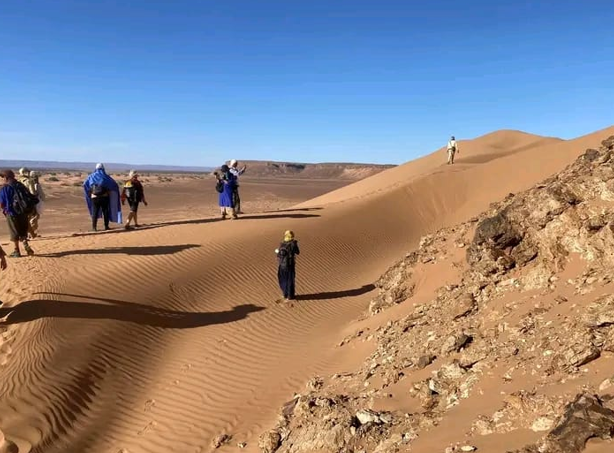
Nomadic Crossing · Sahara Ergs · Authentic ExperienceThis Nomadic Crossing in the Heart of the Sahara Ergs offers a unique experience with a rarely matched feeling of isolation and freedom. Passing by the tomb of Sidi Salah adds a spiritual and historical dimension to this adventure, in keeping with local traditions of the Nomads of the Sahara.
This tour is a true immersion in the authenticity of the Moroccan Sahara, where the desert reveals all its grandeur and wild beauty. Accompanied by a team of Sahrawi nomads, it not only allows you to navigate these vast expanses, but also to discover their ancestral way of life.
Crossing the ergs, these immense golden sand dunes, offers a unique experience, with a rarely matched feeling of isolation and freedom. Passing by the tomb of Sidi Salah adds a spiritual and historical dimension to this adventure, in keeping with local traditions.
The absence of water points during the first three days emphasizes the demanding nature of this trek, but also its authentic character, where only seasoned caravans and nomads can travel. This journey promises landscapes of rare beauty, unforgettable starry nights, and a true reconnection with nature.
Tour Highlights
What makes this Nomadic Crossing unique- Authentic experience with Sahrawi nomads and their ancestral way of life
- Crossing multiple ergs (golden sand dune systems) in the heart of the Sahara
- Visit to the spiritual site of Sidi Salah tomb
- Discovery of prehistoric sites with ancient burial mounds
- Spectacular views of the Algerian-Moroccan borders from Ras Rich Mountain
- Wild bivouacs under star-filled Saharan skies
- Scenic drive through the High Atlas Mountains via Tizi'n Tichka Pass
- Exploration of the Draa Valley - Morocco's largest palm grove
- Authentic desert experience with minimal tourist infrastructure
Detailed Itinerary – 8 Days
Authentic nomadic experience through the SaharaFlight from France to Marrakech
Arrival at Marrakech airport, welcome, and private transfer to your charming riad. Dinner at your leisure and overnight stay on site. Time to acclimate to the Moroccan atmosphere.
Marrakech – Zagora – Zaouit Sidi Salh – Tidri Dunes
Meet your driver and depart via the superb road that crosses the High Atlas Mountains to Tizi'n Tichka (altitude 2,260 m) – the highest road pass in Morocco, offering spectacular panoramic views of the mountains and valleys along the way. Enjoy the magnificent landscapes of varied colors and the Berber villages that dot the route. Continue to Ouarzazate (free city tour), before beginning the descent of the palm-lined Draa River Valley. We reach the meeting point with the camel guides in the village of Zaouiat Sidi Salah (the capital of the region). We arrive on foot at our camp at the great dune of Tidri. Dinner and overnight stay in a tent or under the stars in a wild bivouac.
Tidri Dunes – Erg Sahel Dunes
Departure from the golden dunes of Tidri, crossing the hard and rocky plateau (Reg) with its stony desert. A less sandy plateau in the heart of the Erg Sahel dunes. Free walk in this beautiful setting. Dinner and overnight stay in a tent or under the stars in a wild bivouac. Experience the vastness and silence of the true Sahara.
Erg Sahel Dunes – Ras Rich
After a walk in these magnificent dunes, we set off for a long crossing of the dune plateau to reach a nomad well. Along the way, you will make a stop near a prehistoric site and its numerous burial mounds, discovered during a reconnaissance trip. Continue your trek and set up camp near Ras Rich Mountain. You will have the opportunity to admire the sunset and see the Algerian-Moroccan borders. Dinner and overnight stay in a wilderness bivouac.
Ras Rich – Erg Hniti
After breakfast, depart to continue our Saharan adventure, with another long 5-hour hike, crossing the desert plateau to reach the Erg Hniti dunes. Experience the rhythm of nomadic life as you traverse these magnificent landscapes. Dinner and overnight stay in a wilderness bivouac surrounded by the silence and beauty of the Sahara.
Erg Hniti – Oulad Driss
After a stroll through these magnificent dunes, we head towards M'hamid. You will depart through the magnificent Draa Valley (the largest palm grove in Morocco). Continue through the High Atlas Mountains and the Tizi'n Tichka Pass. You'll then reach the Marrakech medina and your charming riad. Dinner and overnight stay at your riad.
Ouled Driss – Marrakech
Return to Marrakech. Late afternoon, free city tour to explore the vibrant medina, souks, and famous Djemaa El Fna square. Dinner and overnight stay in a guesthouse in the heart of the medina, reflecting on your incredible Saharan adventure.
Marrakech – Marrakech Airport
After breakfast, free morning with option to visit a traditional hammam for relaxation. Transfer to Marrakech airport depending on your departure time, marking the end of your unforgettable Nomadic Crossing in the Heart of the Sahara Ergs.
What's Included / Not Included
To prepare your budget comfortably- Transfers between Marrakech, M'hamid, and Marrakech
- Hotel or riad in Marrakech with lunch
- Complete desert trek with experienced guides
- Camels for luggage transport during trekking days
- 4 nights bivouacking in the desert
- 1 night at the Bivouac Hostel in Oulad Driss
- Full board during the trek
- Guide/cook (local French-speaking guide)
- Complete cooking and bivouacking equipment
- Drinks and personal expenses
- Meals in Marrakech
- Tips for guides and staff
- Travel insurance during the trip
- International flights to/from Morocco
- Optional activities not mentioned in itinerary
Practical Details
Duration, level, seasons & participants– Hat for sun protection
– Sneakers/Hiking boots
– Lightweight backpack
– Warm clothes for the night in the Sahara
– Personal medications and toiletries
– Reusable water bottle
– Sunscreen and sunglasses
Tour Route Map
Explore the Nomadic Crossing route through the Sahara ErgsFrequently Asked Questions
Some answers before you goThe trek is rated as moderate, with daily walks of 4-6 hours through sandy terrain. The absence of water points during the first three days adds to the challenge, making this an authentic desert experience. Participants should be in good physical condition and prepared for the desert environment. For more information about preparing for desert adventures, check out our Complete Guide to Traveling and Exploring Morocco.
Summer months in the Sahara can be extremely hot, with temperatures often exceeding 45°C (113°F). From October to April, temperatures are more comfortable for trekking, typically ranging from 15-30°C (59-86°F) during the day. The cooler nights also make camping more pleasant. For detailed safety information about traveling in Morocco, visit our Morocco Safety Guide.
This is an authentic nomadic experience rather than a tourist desert camp. You'll be accompanied by Sahrawi nomads who share their ancestral knowledge and way of life. The route takes you through remote areas with minimal tourist infrastructure, offering a genuine experience of the Sahara. The absence of water points for the first three days emphasizes the authentic character of traditional nomadic travel. Morocco.
Regular walking before departure is recommended, especially on sandy surfaces if possible. Bring broken-in hiking boots, light-colored clothing for sun protection, a wide-brimmed hat, sunglasses, and high-SPF sunscreen. Evenings can be cool, so pack layers including warm clothing. A detailed equipment list will be provided upon booking. We recommend bringing a reusable water bottle and personal medications.
You'll stay in wild bivouacs during the desert portion - sleeping in tents or under the stars in remote locations. In cities, you'll stay in comfortable riads or hotels. The bivouac equipment includes proper tents, sleeping mats, and all necessary camping gear. This combination offers both comfort in cities and authentic experience in the desert.
Morocco is a Muslim country with conservative traditions. We recommend dressing modestly, particularly when visiting villages. Women should consider covering shoulders and knees. It's respectful to ask permission before photographing local people. Your nomadic guides will provide additional cultural guidance throughout the journey to ensure respectful interactions with local communities and fellow travelers.